How to tell if your furnace heat exchanger is cracked
A cracked heat exchanger leaks carbon monoxide into your Topeka home. Here are the symptoms, the inspection steps, and what replacement costs in 2026.
You can tell if your furnace heat exchanger is cracked by three signals that show up together: a yellow or orange burner flame instead of blue, a metallic or formaldehyde-like smell when the heat runs, and a carbon monoxide detector that keeps going off. Any one of those means you shut the furnace down and get it inspected before you run it again. Below we cover the full symptom list, how a real inspection works, what replacement costs in Topeka in 2026, and when a crack is repairable versus when the furnace is done.
A cracked heat exchanger is a furnace component failure that lets combustion gases mix with the air your blower pushes through the house. It is the one furnace problem that is also a health problem, which is why we treat it differently from a bad igniter or a noisy blower.
What a cracked heat exchanger actually is
The heat exchanger is the steel or stainless steel chamber between the burner flame and your supply air. It has one job: hold the flame and its exhaust on one side, and let the blower push clean household air over the other side. Metal expands and contracts every heating cycle. After 15 to 20 Kansas winters, that flexing starts a hairline crack at a seam, a weld, or the curve of the metal.
Once the crack opens, the pressure difference between the two sides does the rest. The blower side runs at higher static pressure, so it pushes air into the flue instead of pulling exhaust into the house - until the blower shuts off and the draft reverses. That reversal is when carbon monoxide enters your ductwork. It happens in seconds, and it happens most often at the end of a heating cycle.
That is also why a crack is not something you can spot from the outside of the cabinet. The exchanger sits behind the burners and the blower, inside the vestibule. You need a borescope, a combustion analyzer, and a trained eye to find a crack that is 1/16 of an inch long.
The symptoms Topeka homeowners notice first
Heat exchanger symptoms in Topeka show up in the flame, the air, and your utility bill before they show up in a detector. Here is what we ask about on the phone, in the order that matters.
- Flame color. A healthy natural gas flame is blue with a small, steady inner cone. A yellow, orange, or flickering flame means incomplete combustion, and incomplete combustion plus a crack equals CO in the ducts.
- Smell. A metallic, burnt, or formaldehyde-like odor when the furnace fires. Some people describe it as the smell of a hot iron. It fades after a few minutes, which is why homeowners dismiss it.
- Headaches and nausea that improve when you leave the house. This is the pattern we hear most from families in older Topeka homes. Symptoms that clear up at work or on a weekend trip are a red flag, not a coincidence.
- CO detector alarms. A detector that chirps once and stops, or one that goes off and resets, still counts. Test the detector, then call us.
- Soot streaks or corrosion around the burner compartment or the flue collar. Soot means the flame is not burning cleanly.
- Rising gas bills with no change in thermostat settings. A cracked exchanger loses heat up the flue instead of into your rooms.
- Short cycling. The furnace fires, runs two or three minutes, and shuts off. A pressure switch or flame sensor can cause this too, but a warped exchanger changes the draft and does the same thing.
Two or more of those together is not a wait-and-see situation. Shut the gas valve off at the furnace, open a window, and call for a Furnace Safety Inspection Topeka KS before you run the heat again.
How do I know if my heat exchanger is cracked in Topeka KS?
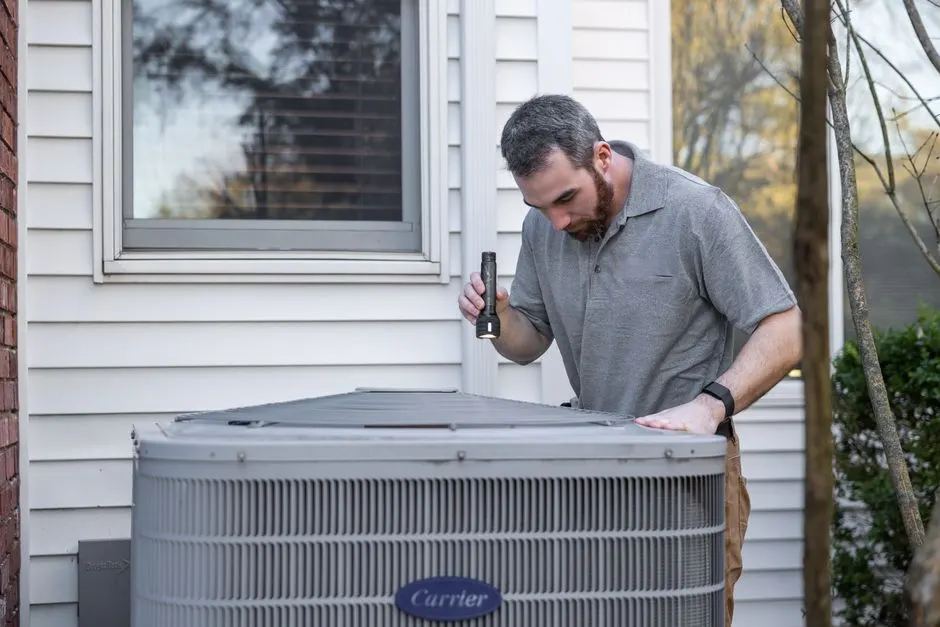
You know for certain only through a visual inspection with a borescope, because a crack is internal and often smaller than a grain of rice. A technician pulls the burners, inserts a camera into each exchanger cell, and looks at the seams, the welds, and the curve where the metal bends. That is the only method that confirms a crack rather than guessing at one.
The inspection takes 45 to 90 minutes on most residential furnaces. We also run a combustion analysis at the flue, which reads CO in parts per million and oxygen percentage. A flue reading above 100 ppm CO on a steady-state run, combined with a visual crack, is a confirmed failure. We also do a pressure test on the exchanger where the design allows it.
Here is what we check, in order:
- Pull the burner assembly and inspect each cell with a borescope.
- Look at the flue collar, the inducer gasket, and the collector box for soot or rust trails.
- Run a combustion analyzer at the flue and record CO and O2.
- Check the flame sensor and igniter for signs of rollout or delayed ignition.
- Test the CO detectors in the home and note their age.
If you are in an older house with a 20-plus-year-old furnace, this inspection is worth doing even when nothing feels wrong. We see the highest crack rates in Topeka homes built before 1980, where original furnaces were sized for loose construction and then replaced with equipment that cycles harder. If you are already weighing a repair against a new unit, our Furnace Installation Topeka KS page covers sizing, efficiency, and what a swap actually involves.
Is a cracked heat exchanger dangerous in Topeka Kansas?
Yes. A cracked heat exchanger is dangerous because it is the most common path for carbon monoxide to enter a home's ductwork, and CO is odorless, colorless, and lethal at sustained concentrations above 70 ppm. The CDC puts CO poisoning at roughly 400 deaths and 50,000 emergency room visits a year in the U.S., and heating equipment is one of the leading sources.
The risk is not constant. It spikes at the start and end of a heating cycle, when the pressure balance flips. That is why families can live with a cracked exchanger for a season and feel fine most days, then get sick on a cold snap when the furnace runs for 20 minutes straight.
Three things raise your risk in Topeka specifically:
- Tight, modern homes. Newer construction and recent window replacements reduce natural air infiltration, so CO that would have leaked out through a drafty wall now stays inside.
- Cold snaps. When the temperature drops into the single digits, the furnace runs longer and the blower runs longer, which means more cycles and more reversal events.
- Missing or dead CO detectors. CO detectors have a 5-to-7-year service life. If yours is older than that, it may not alarm at all.
If you smell gas, hear a boom, or see flame rollout at the burner door, that is a gas emergency, not a heat exchanger question. Get everyone out and call 911, then call us for Emergency Furnace Repair Topeka KS once the home is safe.
What to watch out for
Most of the bad outcomes we see in Topeka come from three mistakes, and all three are avoidable.
Mistake one: sealing the crack instead of replacing the part. Furnace cement and high-temp silicone do not fix a heat exchanger. The metal around the crack is already fatigued, and the next heating cycle opens a new one. Any contractor who offers to "patch" a cracked exchanger is not doing you a favor.
Mistake two: trusting a visual look from the burner door. You cannot see a crack from the outside. If a technician tells you the exchanger is cracked without pulling the burners and using a camera or a combustion analyzer, get a second opinion. We have been called to "condemned" furnaces that passed a proper inspection, and we have found cracks on furnaces that looked clean from the door.
Mistake three: ignoring a detector that goes off once. A single chirp is data. Test the unit, check the date stamp on the back, and if it is over five years old, replace it. Then get the furnace inspected.
One more thing worth knowing: a cracked heat exchanger on a furnace over 15 years old usually means replacement, not repair. On a furnace under 10 years old, and still under parts warranty, a Furnace Heat Exchanger Repair Topeka KS can make sense. We price both options before you decide.
When to call a professional
Call a professional the moment you have a yellow flame, a CO alarm, or a metallic smell with the heat on. Those are not DIY-diagnosable. You cannot see the crack, you cannot measure CO without a combustion analyzer, and you cannot safely pull a burner assembly on a live gas appliance.
We handle heat exchanger inspections across Topeka every week, from Furnace Repair in Downtown Topeka to the older housing stock in North Topeka and College Hill. Our technicians carry borescopes and combustion analyzers on every truck, and we tell you plainly whether the exchanger is cracked, whether it is repairable, and what replacement costs. No pressure, no scare tactics.
If your furnace is still running but you are not sure, shut it off at the thermostat and call us. A diagnostic visit is cheaper than a hospital bill.
Frequently Asked Questions
How do I know if my heat exchanger is cracked in Topeka KS?
A borescope inspection is the only reliable way. Look for a yellow burner flame, a metallic smell, and a CO detector that alarms. If you see two of those, shut the furnace off and call for an inspection. Visual checks from the burner door miss most cracks.
What are the signs of a cracked heat exchanger in Topeka?
The top signs are a yellow or orange flame instead of blue, a burnt or formaldehyde-like smell when heat runs, headaches that improve when you leave the house, and a CO detector that goes off. Rising gas bills and short cycling show up too, usually earlier than the detector does.
Is a cracked heat exchanger dangerous in Topeka Kansas?
Yes. It is the leading path for carbon monoxide into your ductwork. CO is odorless and lethal above 70 ppm sustained. The risk is highest at the start and end of a heating cycle, and it goes up in tight, modern homes and during cold snaps when the furnace runs long.
Who can inspect my heat exchanger in Topeka?
A licensed HVAC technician with a borescope and a combustion analyzer. Ask whether they pull the burners and test flue CO, not just look through the door. We do both on every heat exchanger inspection, and we give you the readings in writing.
How much does heat exchanger replacement cost in Topeka KS?
Typical 2026 pricing in Topeka runs $1,200 to $2,800 for the part and labor on a furnace where the exchanger is still available. On furnaces over 15 years old, a full replacement at $3,500 to $6,500 is usually the better call. We quote both before you decide.
Get help with Furnace Repair in Topeka
If you suspect a cracked heat exchanger, do not run the furnace to "see if it gets better." Shut it down, open a window, and let us take a look. We inspect, test, and give you a straight answer the same day.
Call Topeka Furnace Repair at (785) 2198246 and we will get a technician to your door.